Achieving a high score on the IELTS exam requires more than just understanding basic English; it demands a robust and versatile vocabulary. Many students struggle with vocabulary acquisition, often feeling overwhelmed by extensive word lists and complex terminology. However, there is a more effective and enjoyable way to enhance your vocabulary. This blog post outlines a straightforward 6-step plan to help you learn new words in context, ensuring you not only remember them but also use them correctly. Follow these steps, and you’ll be well on your way to expanding your vocabulary and boosting your IELTS score.
1. Find a Source You Enjoy
Select a book, TV show, radio show, podcast, YouTube series, or magazine that piques your interest. Learning becomes more effective when it’s enjoyable, so avoid picking something boring. Your chosen material should be engaging and relevant to your interests to keep you motivated and eager to learn. For instance, if you love technology, consider reading tech blogs or watching tech-related YouTube channels.

2. Get a New Notebook
Invest in a new notebook to record your learning journey. It doesn’t need to be expensive, but it should be something you’re comfortable writing in daily. Having a dedicated space for your vocabulary notes makes it easier to organize and review your progress. Personalize your notebook with stickers or drawings to make it more appealing and reflective of your personality.

3. Consume Your Source
Engage with the material you selected in Step 1. As you read, watch, or listen, pick out 15 words you don’t understand. Try to infer their meanings from the context before looking them up. This critical thinking exercise helps with retention and deepens your understanding of the words. Take your time with this step, as it’s essential for grasping the nuances of new vocabulary.

4. Note Down New Words
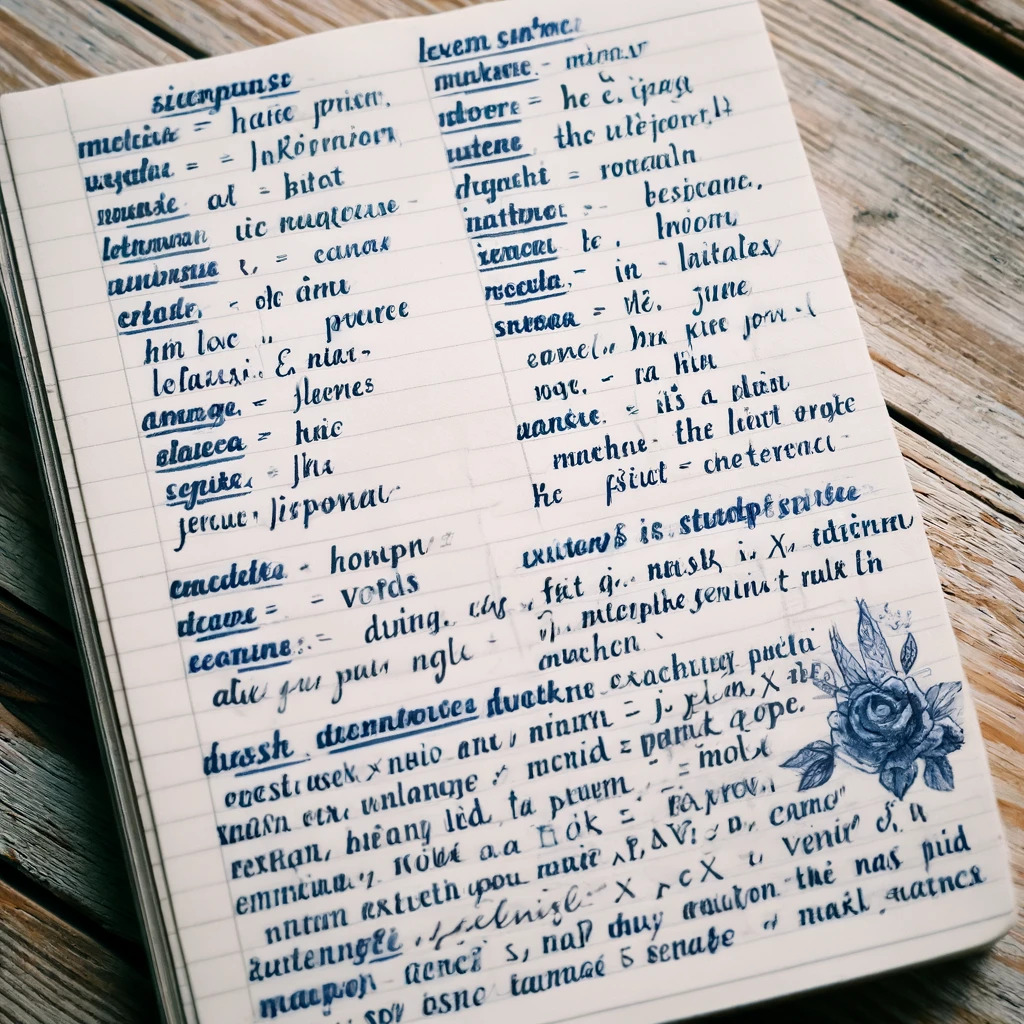
Record the 15 new words in your notebook. Write down the context in which you found them, your initial guess at their meanings, and any sentences where they appear. This practice not only helps you remember the words but also how they’re used in real situations. Consistent note-taking is key to building a comprehensive vocabulary resource you can refer back to.
5. Look Up the Meaning
Use an online dictionary to find the definitions of the new words. Beside each word, note down its meaning, example sentences, collocations, synonyms, antonyms, and pronunciation. Visual aids, such as drawings or mind maps, can also be helpful. This thorough exploration of each word ensures you understand its various uses and nuances, making it easier to incorporate into your vocabulary.
6. Review Your New Words
Revisit the new words after one week, two weeks, and one month. Practice using them in sentences, either in writing or conversation. Regular review is crucial for long-term retention and helps reinforce your learning. By following this strategy five days a week, you’ll have over 300 new words in a month and nearly 2000 new words in six months. This cumulative process will significantly expand your vocabulary and improve your language skills.
How Word Lists Can Lower Your Score
Searching for ‘IELTS vocabulary’ online will yield thousands of sites with long lists of difficult words, claiming to boost your score. However, relying on these lists is not helpful. After years of evaluating IELTS essays, I assure you that memorizing words from a list won’t improve your score. Effective vocabulary learning comes from context, not lists.
The Human Mind and Vocabulary
The brain can only effectively remember about 15 new words in a foreign language per day. Trying to learn more than this can lead to mistakes and improper usage.
The Pitfall of Word Lists
Students often download extensive word lists or ‘Band 7 Vocabulary’ hoping to enhance their vocabulary. However, they usually end up using the words incorrectly. Examiners can detect improper usage and will lower your score for numerous mistakes.
Effective Vocabulary Learning
The 6-Step Plan mentioned above is the most effective method for enhancing your IELTS vocabulary. It has helped many students achieve the scores they needed. You can download my FREE IELTS Vocabulary Improvement Plan below:
IELTS Vocabulary Word Circles
I analyzed recent Task 2 papers and identified 10 common topics. Below are some topics with linked vocabulary:
- Technology Vocabulary
- Education Vocabulary
- Environment Vocabulary
- Health Vocabulary
These lists are not exhaustive but demonstrate how to apply vocabulary improvement methods to common topics.
The Importance of Vocabulary
Vocabulary accounts for 25% of your total mark in the Writing and Speaking tests. Moreover, the Listening and Reading tests are essentially vocabulary tests. The table below shows how synonyms are used in official IELTS reading tests. A broad vocabulary is crucial for success in these exams.
Do Idioms Improve Your IELTS Score?
We’ve assisted many students in achieving a Band 9. Through analysis, we found 18 common idioms used by top scorers. Check out our article to see if idioms can boost your score.
Online Sources of Information
For those in regions with limited English bookshops, online sources are invaluable. They offer a variety of content to keep you engaged. Here are some excellent websites for reading on common IELTS topics:
Staying updated with current events by reading the news daily is also beneficial. BBC WORLD NEWS is a great resource. Additionally, podcasts are an entertaining way to improve your English. Check out my article on using podcasts for learning, which includes a list of my favorites.
By following these steps and utilizing these resources, you can significantly enhance your IELTS vocabulary and boost your overall performance on the test. Happy learning!